Thursday, February 26, 2026

Looping: 2 months-in

 I'm pretty excited about the open source software (Loop) that I'm currently using. The algorithm  is working well for me, and I don't spend much time outside of non-diabetic range. My last A1C was the lowest I've gotten at 6.0. Since I had only been looping for about 5 weeks when I did my blood draw, I believe that it can get lower. 

How I got Loop Started: I had been hearing about it through podcasts and discussion boards, but I didn't really know how to get started with it. I ended up reading a lot on a website called Loop and Learn which is provided by the volunteer developers. Even after reading it quite a lot, I still felt unsure of how to proceed. The weekend my winter break started I decided to watch a video and see if I could follow the steps to build the app. It took me a few hours, and a few missteps, but I got it built and installed on my phone. It was kind of amazing. I set up the therapy settings based on my previous pump numbers and the "safe" recommendations from the DIY Loop community. I connected it to a Omnipod DASH pod, and tested it in the kitchen attached to a glass so I could see it dripping insulin, both basal and bolus. It seemed to work well, as planned. The interface for setting up the pod was very similar to the native Omnipod app.

I wanted to test it out in a controlled situation, so I waited until I was at home post-holidays to give it a go. Honestly, I don't recall any real hiccups... it just worked. Once I put it into closed loop mode it started making adjustments and kept me in range very well. I wondered if I needed to optimize my settings, but it really was pretty good from the start. I was surprised that it worked so well. I loved that it also had an Apple Watch app that allows you to monitor your BG on your watch, and you can even bolus from it. 

Another thing I like about using the Omnipod DASH with the Dexcom G7 is that they both connect via the iPhone, so I don't have to keep the CGM and pump within line of sight, like I did with the Omnipod 5. However, you do have to keep your phone with you for everything to keep working correctly. It's not a big deal to leave your phone in the other room for a bit, but if I try to keep it with me if I'm going to settle in for a bit.

What would happen if my phone was lost or destroyed? The pump would stop receiving CGM data and it would just start delivering my manual basal. I'm thinking about buying a used iPhone that I could install my app on, and it could be used as a backup controller for the system, in case of an emergency. 

Revelations: I have been able to observe my diabetes more closely. With tighter control, I'm finding that stable blood sugars begets lower insulin use. My insulin use has gone down, and I'm finding that my basal may be much lower than I ever thought. I have my current basal settings at 7-10 units of insulin, depending on where I am in my GLP-1 cycle. For some time, 20-24 units of basal was my norm. 

I've included a screenshot of my phone screen for LOOP. It shows the control panel and the data that it shows you all the time. I like how it gives you info about the carbohydrates that are being digested, and the insulin action as well. It has predictive forecasting to show where you will end up, and you can even enter carbs without bolusing to include it in your overall picture. When I eat glucose tablets for a potential low, I enter them and I can see the predicted impact. It's pretty smart.

What's next? I'm investigating another iteration of DIY Loop called Trio. It's made by the same open-source community, but the algorithm is different and is meant to be better for people eating low-carb and/or using GLP-1. It is not as carb-based, and allows for dynamic insulin sensitivity.  This is something that I think might help me navigate the half-life of GLP-1 across the week, between doses. I notice that have 4-5 days of higher insulin sensitivity, and 2-3 days that it wanes slightly. I would imagine this would also be helpful for hormonal cycles that impact insulin sensitivity/resistance. Some of the current users of Trio say that it has allowed them to think about diabetes a lot less and stay in range 80-90% of the time. I have the app built and can deploy it whenever I decide to give it a try.


Sunday, February 1, 2026

Re-starting dia-blogging 2026

 Ok, I'm going to start by giving a status update on my diabetes, and the tools and technologies I'm currently using. I might also give a chronology of where I have been since 2012. I should also note that, since I'm turning 53 this year, I've been T1 diabetic for over 40 years. I'm grateful for diabetes which as taught me to be curious, disciplined, and flexible. 

Note: I'm re-posting this on blogspot from Tumblr. I didn't realize that this was my most current blog, and it's actually a better place to write and interact. 

Insulin: I'm taking Fiasp as my main insulin these days. It's a newer fast acting insulin with an action time starting within 15 minutes and lasting roughly 2-3 hours. It's been a good insulin to use with a pump because it can make corrections faster. I don't have to give lead time before meals. When I first started using it, I noticed that sometimes it noticeably stung at the infusion site. Lately, I haven't had that issue. It seemed like it also used to create inflammation at the infusion site, and absorption would be impacted, but that is also no longer an issue. I don't know if the insulin has changed, or if I've changed... but in the end, it's good.

CGM: I switched to Dexcom a few years ago (probably when I stopped using the Medtronic pump), and it has been great. I waited to go from G6 to G7 till the kinks were worked out, and that was maybe 6 months ago. I'm getting good results with it. One thing I didn't like about the G7 was the requirement that it be in line-of-sight with my Omnipod 5 pump to maintain connection. The G6 maintained a connection wherever it was on my body, but... with G7, I started having to keep the pump and sensor on the same side of my body. I ended up just placing them side-by-side for optimal results. However, I'm no longer using Omnipod 5, so that's no longer a limitation.

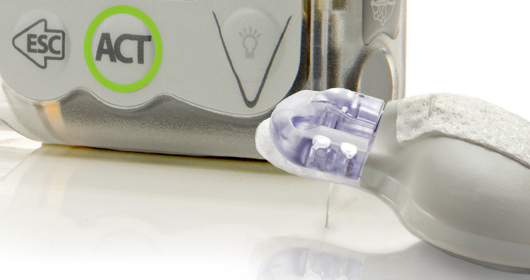
Pump: I'm currently using Omnipod DASH (older model) tubless pump pods as my delivery device. I started using Omnipods within the past year or so. They are fully disposable, and can be purchased via pharmacy benefits. Because of this, I was able to try them without a warranty/ contract situation. My endo mentioned that it's easy to give it a try, despite still having my previous pump under warranty. When I did, I was surprised how much I loved being tubeless. I had gotten so used to threading my tubing through my pants pockets, but it was surprisingly very freeing to be tubeless after many, many years (15?) being tethered. I first started with Omnipod 5, which allowed me to manage the pod from my phone and take insulin from my phone. I switched to DASH pods so I could start using LOOP, an open source algorithm that gets data from the sensor and controls the pump.

Automated Insulin Delivery Algorithm: I'm currently using DIY Loop to control the pump. It was developed by a cadre of open-source developers that wanted to "close the loop" and make an artificial pancreas available without waiting for the slow process of FDA approval, etc. It has been available, and constantly under improvement, for several years. They have been staying way ahead of the commercial offerings and have made some the most advanced algorithms available. The catch... is that, you have to build the app yourself using the resources they make available, so you are totally responsible for the settings and education about what you are doing. I built the app on December 20th, tested it with a DASH pod off-body, and then started using it on January 1st.

One of the reasons that I felt the need to start using a non-commercial algorithm was because I noticed my Omnipod 5 not being able to control my BG after I started using a GLP-1. My insulin needs went down dramatically and the pump no longer delivered the appropriate corrections when my glucose drifted up. I found that my BG was hanging out around 150 mg/dL all the time, while I was very sensitive to insulin and using a lot less.The reason this was happening is because the Omnipod 5 uses your Total Daily Dose (TDD) to decide how sensitive you are, and it downgrades how aggressive your corrections are. With some searching online, I found a lot of people who were frustrated with this, and many of them were tricking the pump into being more aggressive or they were just using manual mode to override this issue. I found that a lot of people were getting better control with Loop, so I planned to try it if I could get the DASH pods, which are hack-able.

Non-insulin Meds: I started taking Metformin a few years ago in an attempt to push back on insulin-resistance. At one time I was taking the max dose, and when I would take less or stop taking it, I would notice a difference. In the online communities for T1 diabetics I had heard that Type 1s were using Metformin and it was helping to stabilize blood sugars by slowing down the glucose being released by the liver. It also has been shown to provide some longevity benefits in cardio and kidney health overall. Sidenote: my T1 dad (60+ years T1) started to notice some brain fog that he associated with metformin, and discontinued it. I haven't noticed anything like that for myself, so far.

This past August I saw my endo and I told her that I'd been a bit frustrated because I'd been noticing insulin resistance that I couldn't seem to counter with eating differently or exercising more. I had spent a summer walking a ton and eating low-carb, and I found my blood sugars hovering high for periods of 6 hours or more. As soon as I ate again, I'd be chasing a 200 for a while. At night my BG wasn't coming down with the help of auto-mode on the pump. It didn't make sense, and in the past I had good results from my interventions. I also noticed that I was using more insulin and slowly gaining weight despite increased physical activity. I had decided to start taking Metformin again to see if it would help with insulin sensitivity.

My endo offered the idea of using a GLP-1. She said that it is like metformin on steroids. I didn't really know what GLP-1s were, but after looking into it I recalled a lot of coverage of a class of weight-loss drugs (Wegovy, Ozempic, etc) that had been adapted from Type 2 diabeles to clinical weight-loss for obesity. I was nervous about taking something that seemed quite powerful and unkown. As I looked into other Type1 diabetics that had been using GLP-1s, I realized that it addressed some issues that are often unaddressed in T1 care (constant hunger, rapid stomach emptying, liver glucose release, insulin resistance). *I had previously used injected Symilin at mealtimes for similar purported benefits, but the hassles outweighed the benefits. I was seeing many T1s talk about their insulin use going down, and blood sugars stabilizing. Many T1s were only using the lowest doses for these benefits. I decided to give it a try.

My endo said that insurance might not approve it since I wasn't obese, but said there were different channels for getting it (compounded, self-pay). Since I have a sleep apnea diagnosis it was approved on 2nd try, otherwise I might not have pursued it. It's an expensive drug.

In early-September, I started Zepbound. Normally, you up your dose every month as long as you can tolerate the side-effects. Your body has to adapt to it. I noticed lots of benefits on the first dose, with blood sugar stabilizing and my insulin use going down to about 50-60% of my previous dose. At the time, I was using the Omnipod 5 in auto-mode and it beautifully adapted to my changing insulin needs. I didn't have lows and just observed that my daily insulin use was going down, along with very flat blood sugar graphs. When month 2 came, my insurance balked at keeping me at the introductory dose, I guess no one is supposed to stay there... but, many T1s do, with good results. I acquiesced and went up to 5mg, which is still considered a introductory dose. I have stayed on that amount for 4 months and plan to stay there till further notice. I'll write up another post with more granular detail about how it works and the nuances of using it.

This post has already gotten long. I will close it out now. I will make a separate post with the results I'm getting with my current interventions. I would say that, at this moment, I have possibly the best blood sugar control I've ever had. Maybe that's why I've been inspired to start writing about it again.

Sunday, January 17, 2021

A new year, and more experiments... Lantus + Auto-mode 😱 , metformin

 I'm eligible for the new pump, but haven't pulled the trigger yet. The current model is pretty much the same as my current one, but it allows you to have your CGM/pump data sent to your phone and uploaded to Carelink auto-magically. I like those things, but... it's not that tantalizing. I'm probably going to call on Monday to see what the status of my upagrade is. 

My latest experiment has been combining Lantus with Auto-mode. Most auto-mode believers would say that this is faithless sacrilege. After 2-3 years I'm not a believer, I'm just willing to listen to the potential. I have found that as a low-carb eater, the pump's meddling with basal insulin has a much bigger impact because my TDD insulin can be 60% basal. When it suspends basal while below 120 md/dL (a totally great place to be), I see an impact later... this phenomenon is especially bad if I spend 1-2 hours at 100 mg/dL prior to a meal (which I wish could be all day). Normally, if I can start a meal at 90-100 mg/dL, I'll be much more likely to keep things in check than if I'm starting a meal at 130-140 mg/dL.  The pump also suspends basal while you have a bolus on-board... so if you go without basal for 2 hours, and then take a small bolus to cover the meal, you may end up only breaking even between meal bolus and missing basal. If I bolus for a beer while making dinner, I'm basically starting this period of time with suspended basal even earlier. Then your food hits an hour later and you shoot up to 200 mg/dL. I was having to bolus for 2X the actual meal carbs and sometimes adding protein to that later.

Another issue is that if something goes wrong with the pump (infusion site goes bad, didn't click the connector all the way, run out of insulin while at work) you only have a few hours before you are in bad shape because ALL your insulin is coming from one source. Or... if you don't calibrate your sensor as soon as it asks, you might go into safe-basal which is only .3 units / hour, and you will see a rise pretty quick. 

So.... I was contemplating taking a pump break and using Lantus for a bit to see if I could use less insulin and simplify things a bit. I was planning on continuing with the CGM, and basically turning the pump basal off... and then I realized that if I were to have the pump with me at all times why not use it for boluses? And then, I thought... if the pump could be used for boluses and corrections, maybe Auto-mode could be useful to fill in the gaps if my Lantus dose wasn't dialed in. 

While I was thinking of getting away from the pump, I actually found the convenience of taking boluses and corrections and keepging track of insulin to be pretty helpful. In the end, what I started to do was take 14 units of Lantus in the morning. This is about 40-50% of my basal insulin. I've had really good results. If my pump goes below 120 mg/dL I'm still getting some insulin (.54 units/hour), so there's no blank insulin-less period of time. Additionally, when I take a meal bolus (which are usually small) I don't have a deficit there either. The basal suspend features are meant for safety in case I were to over-bolus or over-correct, but in my daily life that's not my problem with insulin. I usually run high more than low. This method that I've developed is basically taking some control back from the pump. The pump is still able to control about 1/2 my basal, and it seems like the amount it needs to keep my BG stable. 

I've asked some questions on Facebook groups to see if anyone else has tried this. One Medtronic group wouldn't post my question, but two others pump groups let it through. No one responded that they had done it and most commenters were stunned that I would do this without medical guidance, or thinking I don't trust the pump enough. 

Searching the web, I found one lady who has done this with her Tandem pump using auto-basal. I have exchanged emails with her, and she is no longer doing this because she's committed to trying to get the most from the pump's next generation auto settings. 


Endo visit & Metformin

 I met with my endo last Monday and she thought all my data was pretty spot on. My only blood work was an A1c, which was 7.0. My data from CGM showed my time in range at 79%, with an average BG of 154 mg/dL.

I told her that I wanted to use less insulin, lose weight and get tighter control. She said that the targets from the ADA (80% time in range: 70-180 mg/dL) do prevent complications, and that shooting for tighter control isn't necessary, especially if you are getting dangerous lows. 

She's supportive of my interest in better control, however, and she had already prescribed me Lantus for pump breaks. I asked about Metformin and she thought it was a good drug to address insulin resistance, and liver glucose production. I'm taking that in the evenings with dinner now and have seen some reduction in insulin use. I will report more on that as time goes one. I haven't had any of the gastric issues that are possible. 

My total daily insulin for the past several days: 47.5, 46.5, 45, 52.5, 47.5

I had been averaging 53 units when I posted in October 2020, so I think between a commitment to low-carb eating, walking after meals, and taking Metformin I'm seeing reduced insulin requirement.

Tuesday, November 17, 2020

Manual Mode Experiment Hiatus

I'm back... week before last I was trying to see if I could run with Manual Mode more of the time and keep myself in a better range, but after about 2 days things took a turn and became problematic. While the first day or two I was seeing good results, after a few days it got worse and I felt like I was either insulin resistant or I just wasn't getting enough basal insulin. I might turn my basal up to an average number based on my current basal use, and see how that goes if I try it again.

One advantage that I see in using Manual Mode is that I'm paying more attention and it inspires me to think more about blood sugar in general, which also trickles down in to dietary choices and exercise. When I'm in a normal day of AutoMode I'more likely to miss a meal bolus or not think about blood sugar much at all. I guess paying attention is always helpful for better control. 

 Maybe most days I should pay attention, but then use AutoMode for the days when I can't? Do we always know when those days will be?

I heard from Medtronic that I'm in the pipeline for getting the 770 pump. When they call me, I just have to set up the timing so that I pay my upgrade fee after the 1st of the new year. The new pump isn't groundbreaking, it just gives you the ability to monitor your BG on your phone... but, then there's a software upgrade that sounds like it has a better algorithm with more aggressive auto-corrections.

Monday, November 2, 2020

Aha! Manual Mode was more effective on 11/1

 Yesterday I tried manual mode during the day again, and it gave me quite good results. It was a busy day with quite a bit of activity cooking and doing yardwork. I found I had to eat some pumpkin pie a few times, because the basal rate for manual mode was too much for an active weekend day. However, all said and done... I was in range all day, used less insulin than usual, and didn't have any problems keeping my blood sugars close to normal.

Here are the stats for the day: 

90% in target range, 7% below range (pumpkin pie time), 0% above range, TDD 47.3, Basal 34 units 73%, Bolus 12 units 27%, Total Carbs bolused for 65grams, Correction boluses 2.5 in 3 corrections, Sensor average 124 mg/dL, Standard Deviation 0

See, to me it's interesting that to achieve a real average of 124 mg/dL you have to do something totally different than have a pump trying to keep you at 120 mg/dL. If I had my basal right adjusted for the activity, I probably could have used 40 units of insulin instead of eating pie. But, the pie was delicious, and I rarely eat it when I should, so it worked out well. I also had 2 slices of pizza with dinner, bolused correctly for them and took a walk to help my insulin match up. That was successful as well. I think a day with less carbs could run 37 units, and have me a lot closer to the amount of insulin I was using 10 years ago. 

I have found that switching between Auto Mode and Manual mode is pretty easy. All I have to do is put in a BG reading right when I switch back to AM. At night before I go to bed, I calibrate my sensor and put the pump back into AM. 

Today, I will see if the manual mode basal rate will be right for a day at work. If I bounce along the bottom of the low range, I'll definitely adjust it. Being lowish at work is a little panicky. I'll keep some sweet tarts on hand (just adjusted my manual mode basal rate to 30 units from 34). Right now my basal rate is a flat rate all day. So, there could also be some tweaking of that as well.

Sunday, November 1, 2020

Experimenting with Manual Mode during the day

 Almost as quickly as I had pondered the idea, I started trying it. 

Yesterday I took the pump out of auto-mode in the morning and I started correcting toward 90 mg/dL throughout the day. It worked pretty well. My basal was still pretty aggressive and was probably doing most of the work. I stayed in the 90-110 mg/dL range most of the day and things were pretty uneventful. At dinner I had some beer,  soup with pinto beans in it, and then some pumpkin pie, and it was really hard to take enough insulin to keep me in range. I chased it with boluses, and took a walk, and when I went to bed I was at 197 mg/dL and I popped back into AM for bed. During the night my BG came down to 130 mg/dL by 1am. During the night I had a request for calibration or BG (I can't remember) and I entered the last reading it had as a BG and went back to sleep. It's cheating, but being woken up is worse than cheating. 😳 I'm always looking for ways to win against the alerts and alarms on this pump.

Some stats from yesterday: 

Sensor average: 135,  Standard Deviation 49, 6 corrections totaling 7 units, TDD 47.3 units

Questions I have... by not using AM during the day, am I depriving the pump of data that helps it keep me in range better? Or, does it know me well enough by now that it can jump in at any time? The warm-up period for AM is MM with sensor, so maybe I'm just warming it up all day?

Wow... Almost 10 years...

 I'm really glad I have this blog because it gives me metrics to compare as I track my health. I am really interested in seeing how things change over time, and to read back through the 137 posts that I wrote over the course of 3 years, it makes me realize how much attention I was paying to my physical health and my diabetes management. I hadn't realized that I have been using CGMs for over 10 years... I didn't realize that I've been using a pump even longer. I'm not even sure how I found the time to write that much... but, I did. 

I'm going to compare some data from then and now and use it to create some goals for myself. 

October of 2012                                     October 2020

Total cholesterol: 250                            220
HDL: 72                                                53
Triglycerides: 56                                    108
LDL: 167                                                145
CHOL/HDLC ratio: 3.5                           4.1
NON-HDL Cholesterol: 178

A1C: 6.4                                                 7.4

We  can see that my lipids are pretty similar, but the triglycerides are higher. I want to get those lower to support my desire to stay off statins. I think getting better glucose control and eating lower carb will help lower inflammation and also get the triglycerides down. It seems that my total cholesterol and HDL/LDL are about the same, but more exercise might help me raise the HDL for a healthier ratio. 

My current A1C is higher than I'd like, but it's been this way for a while. I noticed that when I started using the 670g pump in auto-mode, my average glucose levels have been higher and my TDD (total daily dose) for insulin also went up. My weight has stuck at 170-180 lbs, and I haven't been able to make much impact on it no matter what I do with diet and exercise.

The 670g pump shoots for a glucose level of 120 mg/dl, and it rarely gets you below that. That being said, my average blood sugars range from 120-180 on a daily basis. This jibes well with my current A1C which is 7.4, or an average BG of 164. I'm wondering if I used manual mode during the day and was more aggressive about correcting to 90 mg/dl if I could get my average down. I would have to get my basal really dialed in to make that work. I think another factor for this current A1C is that I have a transmitter that is on it's way out... and for a few months prior to my AC1 check it was throwing errors and requiring a BG randomly. This would bump me out of auto-mode overnight, etc. I wasn't able to stay in AM for long stretches of time. 

Here are some numbers from the last 14 days: 

82% time in auto-mode, 65% time in target range, 0% below range, 18% above range, TDD 53.8 units, Basal 36.7, Bolus 17, 91 grams of carb bolused for daily,  Sensor Average 149 mg/dL, standard deviation 18.6

The new pump that I'm hoping to get in 2021 is supposed to allow for a target BG of 100 mg/dl. If that works, I think I could improve my glucose control, especially since it also gives auto-boluses to correct when you get really far out of range.

Thursday, October 29, 2020

Really catching up...

I just found this blog again. I have been missing long-form writing and having ways to journal about many things in life. 

Since I've lapsed into paying much less attention to my diabetes, I'm thinking it might be a good idea to return to dia-blogging. I don't know if anyone is still reading... but, I plan to try to document my journey again, if only for myself. 

 I'm going to summarize my current situation- before I get started with regular posts. 

I'm still using a Medtronic insulin pump. Currently it is a 670g model with the Guardian sensor. I've been using it for about 2 years, and it has made life a bit easier. I wouldn't say my control is better, but I'm spending less time thinking about my glucose levels. At release, this pump was touted as the closest thing to an artificial pancreas on the market. It is pretty smart, but it's pretty slow to make changes to your blood sugar. It's very safe... I have my eyes on the next generation coming up. 

I stopped using Symlin. I wasn't getting a huge benefit from it, and it was very expensive for my insurance to pay for. Right as I was choosing to discontinue it, my insurance took it off their list of approved drugs. So, all's well that ends well. 

I'm walking for exercise. Over the past several years I have had some foot and back pain that has put a damper on exercise, but I've tried to stay consistent with walking daily. 

I'm re-reading Dr. Bernstein's Diabetes Solution book. I'm trying to get my self psyched up to care more... The fact is, we need a pep-talk once in a while. I've gotten pretty lax about carbs, while still trying to keep my levels pretty good. 

My A1Cs have been in the 7s all along, but I think I could do better. I've recently re-doubled my efforts with low-carb eating. Most days I don't eat significant carbs till dinner, and I'm trying to keep that down to a minimum. I think my real carb downfall might be the pints of homebrewed beer that I like to sip at night. 

 Ok, I have to stop there... this doesn't have to be comprehensive, and I think it's just more important that I get something re-started. Anyone still reading? Anyone still have an RSS feed?

Wednesday, August 6, 2014

Catching up!

I have a train ride to Chicago, and I thought it would be a good time to get caught up on some diabetes blogging. 

I've had a few observations that I've wanted to write about for a while. 

Sleep and blood sugar levels
My previous  experience of blood sugar problems while sleeping was mostly focused on waking up sweaty and hypo. I felt like sleeping with high BG was just poor, unrestful sleep, but not the end of the world. 

Lately, I've been finding that I've had a reversal. If my blood sugar rises to over 170 mg/dL while sleeping it will wake me up, and I can tell my body temp is higher and I will begin to sweat. I usually won't be able to sleep fitfully again till my BG is headed downward. Often I find myself up at 2:30am waiting for a correction to take effect. 

On the other hand, I've also discovered that my best sleep is often when my glucose levels are 60-70 mg/dL. I know it sounds crazy to sleep while teetering on the edge of hypo, but it's really the best sleep ever.

So, I think it's really interesting that my symptoms and sensitivities seem to have changed. I'm curious if any other diabetics have experienced this. How do you rate your sleep at different ends of the BG spectrum?

Sunday, November 17, 2013

Enlite! Oh... wait.


Ever since I heard about Medtronics new CGM Enlite sensor I was excited to get it. It's reportedly tiny, painless, more accurate, with an intended 7 day use. Despite the Dexcom being the favorite choice for long-wear and comfort, I've been waiting for a sensor that has all that, but continues to integrate with my pump. The FDA had been SUPER slow in getting it approved. So, finally a couple weeks ago we got the news that it is approved and immediately available! I called them to get it sent to me, but found out that you have to also have the latest pump with low threshold suspend. So, I have to wait until my warranty period is over (May 2014), before I can get the newest pump and the Enlite sensors. I guess patience is all part of the game. But, I have to say... this timeline is nothing compared to what my sister has experienced in the UK with national healthcare. She was told a couple years ago that she was on a waiting list for a pump, and then hasn't heard a peep since.

In the meantime, I'm using expired sensors because I get much more wear on one than is recommended. I get 7-10 days on a 3 day sensor. They are working just fine. I had to ask M-tronic to stop shipping me sensors (and a bunch of other stuff) till I could get caught up. I probably won't have to get anymore before the Enlites come. The good news is, I'm on a winning streak with the Sofsensors no bleeding or bruising, just moderately painful harpooning. I can live with it till at least May.

Monday, October 21, 2013

Blood sugar mysteries,the good kind...

Back in September, I believe it was 9/9-9/10 or somewhere around there, I got spooked by my glucose levels. For about 36 hours my levels stayed incredibly stable! It was an almost un-diabetic experience. I kept looking at my CGM graph and felt fairly incredulous when I saw that I was still cruising steady at 80 mg/dl. I kept double-checking with my meter because I thought my sensor was going bad. It wasn't, I was literally teetering on the edge of perfect blood sugars no matter what I did. It wasn't just that I was running lower than usual, it was that I was neither rising nor dropping the normal amounts that you expect in the course of a day. I checked my data on the CGM and it showed that I was averaging 76 mg/dl and, (with the 24 hour high being 83 and low being 60) the standard deviation was something insane like 7.

Theories went through my head:
-was my infusion set in a vein, giving me super efficient insulin delivery?
-had my body figured out how to moderate my blood sugar (both high and low) just a tiny bit better?
-was I getting beta cell function back?

I still have no idea what was going on. On the third day or so my I think I sabotaged it and had dessert or something. It was almost like I wanted to make sure everything was still volatile. Party over!

Here's something I can say for sure, the more I aim for good control, I notice that my body becomes accustomed to that regularity, and it becomes easier to achieve it. When things are erratic, they seem to stay that way until I really settle things down with some simple living. It seems like there is some inertia to it, and it goes in cycles. Additionally, one of the major variables that seems to have the most consistent affect on my control is my infusion sites. When they are working well, it's a dream... when they lose their magic, it's obvious, and my blood sugars rise and react sluggishly to insulin.

Thursday, September 12, 2013

Untethered For a Day

When I woke up yesterday with no more Novolog in my pump, I did what any sensible insulin addict would do and took some expired Lantus. How much? To be safe I took 50% of my total daily dose, 18 units. Immediately my levels returned to normal and I felt that twinge in my gut that signals glucose dropping quickly. It was such a distinct sensation that I wondered if Lantus loses it's time-release function and acts quickly when it's old? It leveled off in a comfortable range and I relaxed.

I disconnected my pump, but carried it around all day since it could receive data from my CGM and help me keep tabs on my levels. During the day I had to do corrections of expired Novolog from a pen. They sort of worked... I was able to keep my glucose at or below 200 all day. Due to a busy day and subbing for a colleague, I didn't have lunch, so I was able to skip the mealtime bolus drama. The corrections throughout the day were already keeping me pretty busy. (Meanwhile, in the pharmacy, it was taking them all day to get a hold of my doctor and get me some emergency insulin. Good thing I didn't throw that expired insulin away. )

I picked up some legit Novolog pens, but didn't want to start the pump back up until the Lantus was out of my system. I did have a low after dinner and had to do some snacking to keep things in check. I had been a bit aggressive with corrections since I suspected the Lantus would eventually start to taper off. Of course, overnight my levels started to rise and I was awakened by high blood sugar at 2:30am. I couldn't sleep so I got up, loaded the pump, took a Symlin aided correction and have been up since. I probably will regret not sleeping, but the week is winding down and after lying in bed for an hour, there's no point in staying horizontal.

It was an adventure. I kind of liked being free from tubing for the day, but correcting with Novolog every couple of hours was similar to being tethered to something. I didn't relax about it too much.

I have some blogging to do...

I've been storing up some thoughts, observations and data that I would like to document here. I'm going to make a list to remind myself of the writing I'd like to do.

  • Blood Sugars Mysteries, the good kind... (why do we have a day or two of unbudgeable perfect glucose control?)
  • Off label uses for Symlin
  • My LDL Cholsterol went down (a lot) for the first time in 7 years. Why?
  • My other data from the recent months, not as bad as I thought. 
  • iBGstar Meter on sale, is it worth anything?

Wednesday, September 11, 2013

It might be an interesting day for glucose...

Every time I fill my pump reservoir I hold the wee cylinder of insulin up to the light and say to myself, "I can't believe this tiny little amount of clear liquid is going to keep me alive for the next few days". It's always kind of awesome to realize.

And then, today, I ran out... Like, really ran out! What's going to keep me alive?

I'm feeling a little irresponsible, but I'm also a victim of the random whimsy that is mail order prescription drug service. Usually they ship overnight, and usually they auto-ship. Neither of those happened, and when I got down to about a week of insulin left, I manually ordered my prescriptions. I got a confirmation that my shipment had been shipped and was relieved. Then yesterday, I came across this sad little package on the counter that had some pills in it that I didn't need. "Where's the insulin?" I checked the website and see that all the diabetes related stuff was hung up (no doctor refill response?), and not yet shipped.

Hmmm. In the fridge I have Lantus and Novolog pens, but they expired a year ago (it probably IS irresponsible to not know the status of those). I took some anyway (and Symlin). I know that when stuff expires it often still works, maybe just not as well. I could fill my pump from the Novolog pen, but I don't really want to commit quite yet. What works better 12 months expired Lantus, or 9 months expired Novolog?

I called Walgreens at 5:30 this morning and explained my situation. They are going to try getting in touch with my doctor, and then try to get the insurance to override the insurance limitations and get me some fresh Novolog. Sounds complicated, but I think they've done this before. I'm glad they are 24 hours.

I'm sure I'll learn a lesson from this, I usually do. 

Sunday, June 23, 2013

New meter, again.


I use pretty much whichever meter is integrated with my Medtronic insulin pump. It keeps things simple. First they gave me a B-D Link Meter, then about two years later they switched to One-Touch Ultra Link, and now they are paired up with Bayer. A few months ago they shipped me a Contour USB Next Link. Yep, next is right.

The Next Link is supposed to be more accurate, and it has a USB connector right on it, and works to upload your pump data. So, you don't need another device to upload your stats to the Medtronic CareLink reports website. It's pretty small too.

All that said, I'm not totally flipped over it. There are definitely some things I like about it, but unfortunately the things I don't like about it pop up every time I use it.

Operation:
My old Linked meters used to just send the test results directly to the pump and initiate a conversation about a correction, if needed. This one asks me every time if I want the results to be sent to the pump. Every time... I have to decide. It also asks me upon each test whether this is a before meal test or an after meal test, I always push "no mark" because... I really don't care... (my pump already has all the meal times programmed so I can look at that data later). So, before I can see my darn numbers I have to answer questions, and then I have to tell it to send the results to my pump. I'd love to skip the questions and just get on with it. This is a major weakness with this meter, for me... I've thought that maybe it can be programmed to skip this stuff, but I haven't investigated. (I just did and found that you can either "never send results", or "ask me".)

Okay, other factors... 
  • Despite the meter being small, the case is just as big as other meters have been. This is okay for me, because I always try to keep my Symlin pen with my meter, and it barely fits in the case. 
  • The elastic strap that holds the meter in place is flimsy and cuts right across the middle of the screen. This is weird. 
  • The zipper on the case opens in an unintuitive way so that whenever I unzip it, my meter is upside down. It's like you have to forget all you've ever known about books, left to right, and top to bottom.
Some good things...
  • I like the color screen.
  • The results are quick, once you answer the requisite questions and finish getting annoyed. 
  • The test strip container is big enough for you to get your finger into the container and drag a strip out. I've had a few meters where you had to shake them out.
  • The meter has a rechargeable battery that you can recharge less than once a month by attaching the USB connector to your computer. My other meters only needed batteries about once a year, so this isn't necessarily an upgrade.
  • Accuracy? I tested this meter against my One Touch Ultra Link a few times and didn't find  much of a discrepancy. I think it may just be a reason to get users on board with the change, but in the end it probably isn't that significant, considering that the accuracy standards for meters are rather soft (+/- 10%). The change probably had more to do with business relationships and money than accuracy. Maybe I'm just jaded?
That's what I have on this. I'd be interested in hearing from anyone who has thoughts on this change. And if you know how to make it more convenient to operate, let me know...

Update: After messing around with the settings a bit, I was able to turn off the "before meal/ aftermeal" questions. Now I just have to test and send reading to my pump. It's not as annoying, but still kind of unnecesary.

Saturday, June 22, 2013

An easy study...

Through myGlu.org I am participating in a study about infusion site changing and the length of time it takes before your insulin absorption is affected. It's a pretty easy study, and sometimes I wish I could explain why my glucose was high on waking up (eating dessert usually). But, it's one of those things that is good to see the trends and what might be going on.

They are only collecting info on when you change your site, your fasting BG, and your total insulin needs each day. Well, my food intake and activity is pretty variable these days, so it's hard to tell what trends are site related. Even so, I think I can see a pattern. I almost always change my site based on when I think my insulin isn't acting as effectively as usual. So, I'm already aware of the infusion site factor. I usually find this happens at about day 6-7. 

Thursday, June 20, 2013

Summer Update

With the busy school year taking over my focus for the past few months I haven't spent as much time with diabetes blogging or even thinking very proactively about my glucose control. I guess this is going to happen sometimes. I'm glad to stay that I survived my first year of doing the high school yearbook, and a few days ago we submitted our final pages, and it's done.

On the blood sugar front, I've slipped into a more reactive management style. Just taking more insulin when my levels aren't quite right and not really wondering "why" as much. My consumption of some starches in the evening meal hasn't been working out that well either. I was getting away with it 6 months ago, and now it seems like it is one of the factors that throws things off.

Now that I'm home and have a lot of control of my schedule and activity I've noticed that my glucose climbs at different times of the day for no apparent reason. If anything, I thought that my insulin needs would have gone down in the low-stress, warm month of June. I think my basals need to be tweaked. I'm uploading my sensor and pump data right now, so I can analyze it.

Soon, I will write about: my off-label use of Symlin, the Contour Link meter, and a few other things I've been thinking about.

Wednesday, March 20, 2013

Something to blog about...

Yesterday around 9am my blood sugar started to climb. It wasn't that unusual, being morning and all. But, when it reached the 200s I started taking aggressive correction boluses, and I kept going with it till I got home from work. By this time it was 418 md/dL and I was feeling pretty lousy. So, I drank a lot of water, skipped dinner, replaced my reservoir, and changed my set.

While changing my set I realized what went wrong. The needle had broken off and insulin was no longer making it into the inside. And the needle? Yep, still inside. I'm going to see if it causes discomfort. I searched online and it doesn't seem like this is a very common problem. I have used these sets for years now and never had any problems with them.

Well, I'm happy to say by 9pm (12 hour tour) I was back to 123 mg/dL and was feeling pretty normal. The unresolved part is that needle that just became part of me. It made me considering taking a break from the pump for the first time in a while...

Saturday, February 9, 2013

An unpleasant break in the routine...

On Monday I missed work, and I'm pretty sure it was the first time I've called in sick because of something remotely diabetes related.

During the night on Sunday my glucose level climbed to 350 mg/dL and I was awakened at 3:15am feeling overheated and clammy, and wasn't able to get back to sleep. I tested and took one of the largest boluses I've taken in a while. An hour later I was still in the 300s. Another bolus... and an hour later, with no real progress, I swapped out my infusion set and reservoir. By 5:45 AM I had been over 200 for several hours and was feeling truly lousy. In addition to the normal hyperglycemia symptoms, I was feeling nauseous and had no appetite. I felt like I had the flu. My stomach was gurgling and churning. I called in sick and started crafting my sub plans.
By 7:00am my glucose levels were under 200 mg/dL and I fell asleep. I slept for three hours and woke up feeling much better, with my blood sugar reading 130 mg/dL.

I'm not sure if a stomach bug caused me to go high, or if my infusion set wasn't working properly, but either way my symptoms were both gastrointestinal and high blood sugar. It was unpleasant and I hope to avoid it in the future. It made me realize that I am lucky that these type of complications don't arise more often.