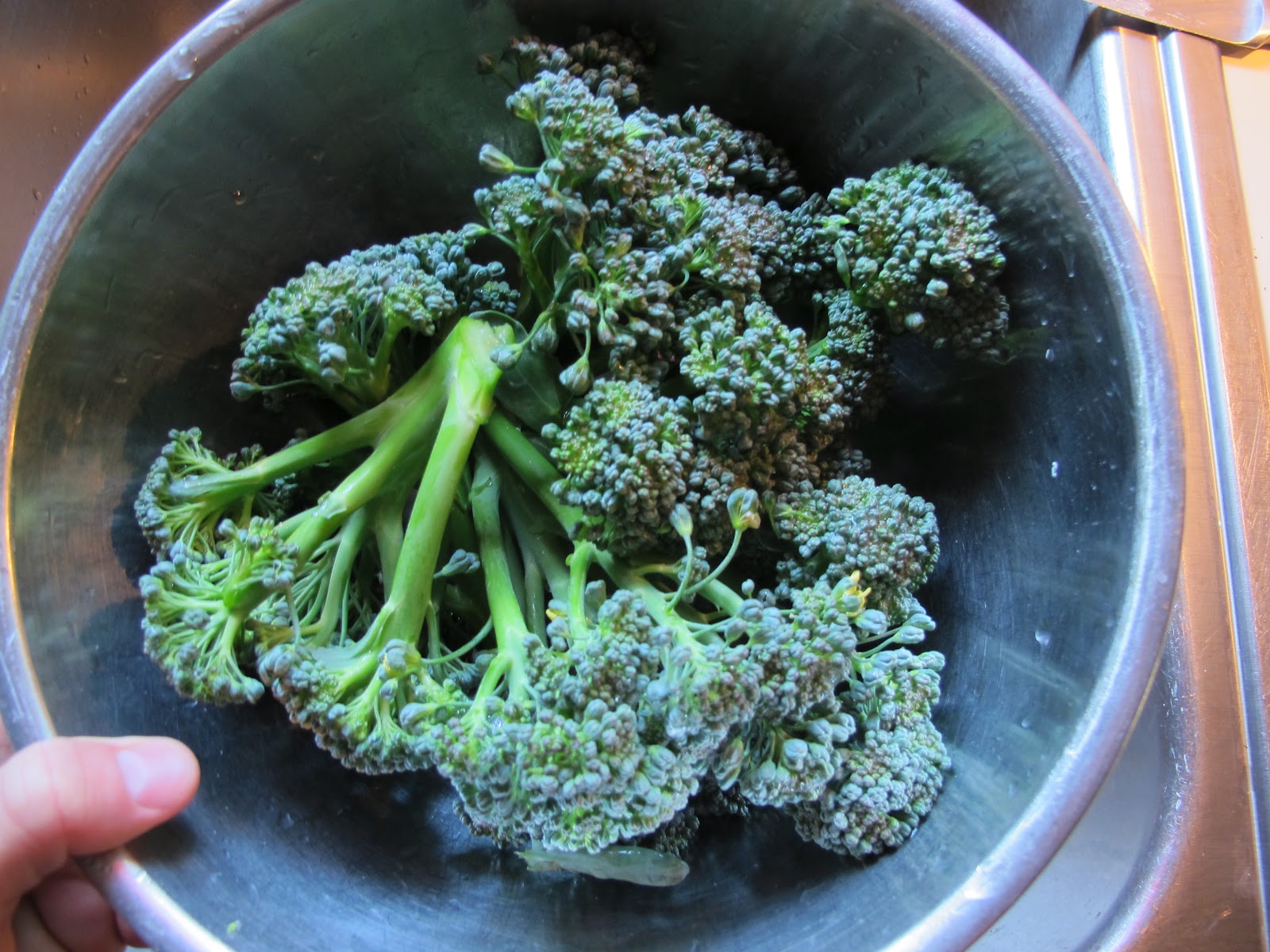
Eating from the garden is probably one of my favorite things in the world. Some coconut oil and red pepper flakes just made the broccoli shine a bit more. When I eat breakfast, this is how I like to do it.
Showing posts with label low carb. Show all posts
Thursday, June 7, 2012
Broccoli breakfast
Eating from the garden is probably one of my favorite things in the world. Some coconut oil and red pepper flakes just made the broccoli shine a bit more. When I eat breakfast, this is how I like to do it.
Wednesday, June 6, 2012
Sheepishly I'm a huge fan... of walking.
I can be pretty stubborn.
Something that I've been stubbornly wrong about it that walking is legitimate "exercise". I've always thought it wasn't strenuous enough or cardio enough to make a real fitness difference. Even with all the recommendations from "authorities" to walk more, I had my own theories about it. I thought that encouraging walking was just a "baby-step" to help unfit people get closer to being active. Maybe the thinking was if you could get people to walk more, they might really exercise someday.
Well, through a circuitous route I've landed myself in the "walking is better than" running, or cycling, or jogging, or _____________ camp. When I take a brisk walk, I find that my insulin kicks in and works better, faster. If it can be seen on a CGMS I'm guessing the same things are happening in everyone that walks. For me, seeing the numbers at work has been very eye-opening.
What does walking have that other forms of activity might not?
It's low-impact. You aren't likely to develop injuries from repetitive actions that your body isn't ready for. Since you walk your whole life, it's the most natural way for you to get moving. (One summer I injured my achilles tendon from doing lots of dog-walking in flip-flops, but that was unusually foolhardy.)
It's accessible. You can walk in any clothing you have on (caution with flip-flops recommended). You can walk wherever you are. You can walk with people who don't normally "exercise". The barriers to getting it done are very few.
It's easy, and the heart rate is spot on. How many times have you done a serious run or bike ride and found yourself exercising at a level that makes you feel lousy and sore, and not look forward to doing it again? For me, if I exercise at a heart rate of over 155 bpm, I'm officially working too hard. I find it very hard to dial myself back to that level when I run or cycle. When I walk at a fast pace I don't think it's possible to breech the threshold into unhealthy exercise. We never return from a walk and think "Wow, I'm super exhausted!" From talking to others, I have found that most people tend to exercise above their target heart rate zone, and often are reluctant to get out there for another workout, because, frankly, it was uncomfortable. For this reason many athletes use heart rate monitors to keep themselves in check and keep from working at a rate that is too high. For me walking is always in the low end of the target heart rate window, and I don't need a heart rate monitor to tell me how fast to walk.
It reduces stress instead of causing it.
Excessive or overly strenuous exercise can cause you negative stress that can oftentimes be worse for your body that better. Cortisol (stress hormone) release from strenuous exercise is conter-productive to most people's fitness goals. Walking has very little risk of working against you this way.
Conditioning.
Contrary to what I had previously thought, walking regularly this season has improved my readiness for other activities. Last summer when I began stand up paddling I found that I could only go out for 15-20 minutes before my legs got too shaky to keep going. This year, on my first day out I was able to go out three different times for about an hour without feeling fatigue in my legs. I think it has a lot to do with the regular activity throughout the winter that prepared my legs for long periods of balance work. That was unexpected.
I'm not saying that everyone should stop doing the exercise that they find stimulating and fun, but that for baseline activity walking is safe, easy, accessible and useful. I began exercising much more frequently since I moved walking onto my exercise menu. If I could cycle, rock climb, cross-country ski, stand up paddle, hike, and kayak everyday I would be ecstatic. Until I retire and live in such a paradise, going for one or two 20 minute walks a day has been incredibly helpful in increasing my insulin sensitivity and correcting BG that is headed out of range.
Monday, May 28, 2012
My Symilin/ Insulin Routine
So, I've been using Symilin alongside my low-carb way of eating for over a month now and I think I have seen some significant improvements in my glucose control. It's taken a bit of experimentation to figure out what works best, but I had some good info to work from as a starting point.
Timing
I take my Symilin dose between 0-10 minutes before sitting down to eat. Once or twice I took it 20 minutes before eating and after a few bites the "satiety effect" kicked in and I didn't feel like eating as much as I had planned (another reason to bolus after the meal).When I take it close to a meal, I have about 15-20 minutes of serious scarfing before I feel full. Sometimes I don't even notice the satiety effect, but I just eat what I normally do and I'm done.
Food Consistency
It is helpful to eat roughly the same amount of protein and carbohydrate in my meals. I'm not even sure exactly how it measures, but I know what it looks like. For most meals I eat 4-6 oz. of protein and some green veggies or salad. If I eat a meal that is slightly different than this, I just use the same amount and plan to correct if needed. When I'm off, the surplus is usually corrected by an evening walk or a small correction 4 hours post meal. A few times I have used a larger bolus for a meal that seemed larger I have ended up getting lows post-meal. When I have had a more active day or am running lowish all day, I will bolus even less.
Insulin Dose Consistency/ Timing
For this average amount of food, I take 1.8 units of Novolog and spread it out over 60-90 minutes with a square bolus. I change the timing post-meal depending on what my starting BG was. If I start a meal over 100 mg/dl I will take it a bit sooner, sometimes even right after a meal. But, if I start a meal at 70-80 mg/dl I give the food plenty of time to start to bring my glucose up and then take the bolus. This would normally be about an hour post-meal.
Taking Symilin After a Meal
A handful of times I have eaten a meal without taking Symilin (because it wasn't with me at the moment) and I have taken it post meal. I didn't notice any difference. I think the low-carb meals are already slow to impact glucose, so there seems to be some wiggle room there.
Symilin Lows
I have read about people having lows that are hard to correct when using Symilin. The reason they are uniquely tricky is that when your digestion is slowed down, it can be hard to get glucose to be quickly absorbed when correcting a low. This knowledge made me very cautious about my insulin dosages while using Symilin. During the first 2-3 weeks using it I was running my BGs higher than usual out of caution. Over time, I have found that my modest doses of insulin do not cause extreme drops, with or without Symilin. The lows I have had in the 50-60 mg/dl range have been easily corrected with 1-2 glucose tablets. The sugar was absorbed normally, and I saw improvement quickly. I think that a low-carb way of eating helps to avoid some of the risks of difficult hypos because the boluses are kept small.
The results have been good for me. I have had rather flat post-meal numbers and I have been able to reduce my total daily insulin. I'm using about 10-20% less insulin.
Subscribe to:
Posts (Atom)

